• About
    • Team
    • External Advisory Board
  • Research
  • Center News
    • Awards
    • Publications
  • Signature Programs
    • Veterans Innovation Network
    • The Active Duty Fellowship Program
    • CERA
    • K-12 Outreach Initiatives
  • Junior Scientist Board
  • Complex Particles Class
  • StructuralGT & ResponseGT Software
  • Internal Resources
  • About
    • Team
    • External Advisory Board
  • Research
  • Center News
    • Awards
    • Publications
  • Signature Programs
    • Veterans Innovation Network
    • The Active Duty Fellowship Program
    • CERA
    • K-12 Outreach Initiatives
  • Junior Scientist Board
  • Complex Particles Class
  • StructuralGT & ResponseGT Software
  • Internal Resources
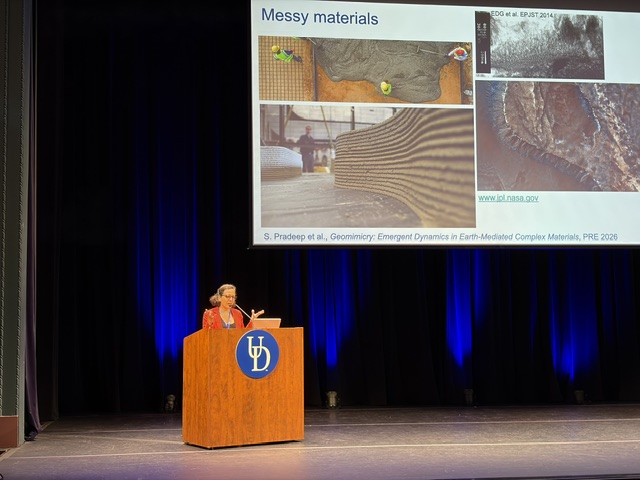
Emanuela Del Gado Delivers Keynote at the 100th ACS Colloid & Surface Science Symposium

Emanuela Del Gado Delivers Keynote at the 100th ACS Colloid & Surface Science Symposium

by COMPASS | Jun 26, 2026 | Center News

COMPASS is proud to recognize Emanuela Del Gado for delivering a keynote presentation at the 100th American Chemical Society (ACS) Colloid & Surface Science Symposium, held at the University of Delaware. The symposium marked the centennial of one of the American...
Tiny Nano-Edges Unlock Big Advances in Programmable Nanomaterials

Tiny Nano-Edges Unlock Big Advances in Programmable Nanomaterials

by COMPASS | Jun 26, 2026 | Center News

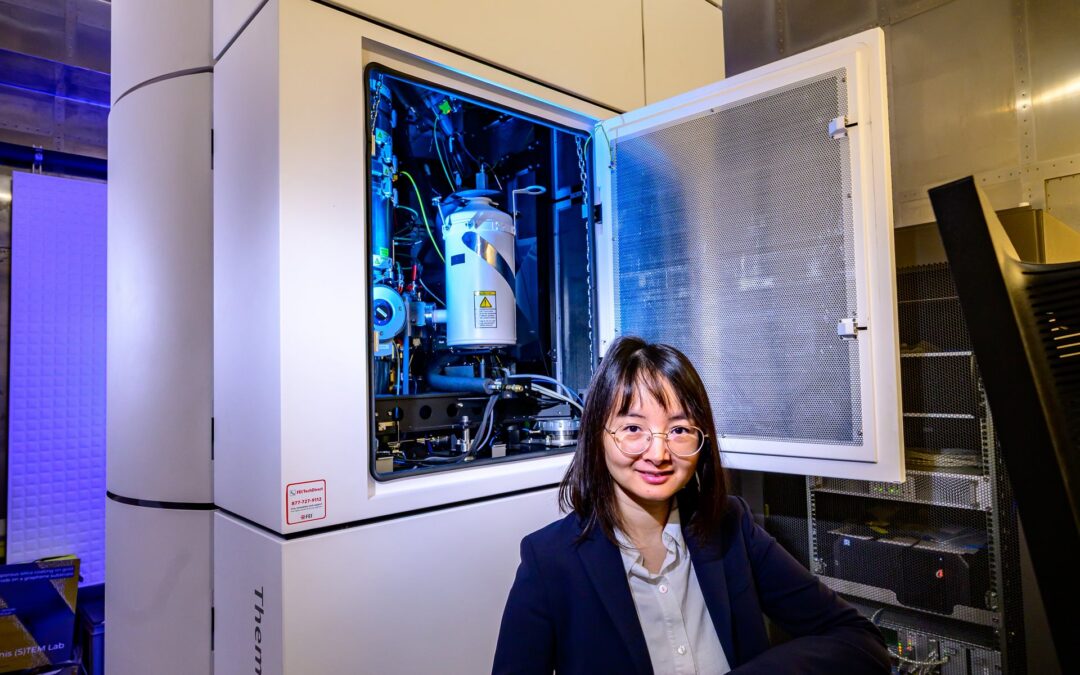
Nature often provides the best blueprint for innovation. Proteins, the molecular machines that power life, owe their remarkable abilities to precisely organized patterns on their surfaces. These intricate surface features allow proteins to fold, recognize one another,...
László Barabási Receives the 2026 Euler Award at NetSci’s 20th Anniversary Conference

László Barabási Receives the 2026 Euler Award at NetSci’s 20th Anniversary Conference

by COMPASS | Jun 8, 2026 | Awards, Center News

COMPASS is pleased to congratulate László Barabási on receiving the 2026 Euler Award, the highest recognition presented by the Network Science Society. Awarded annually, the Euler Award honors a network scientist whose research has fundamentally advanced the field...
COMPASS Researcher Amaan Mohammad Receives Best Poster Award at the 249th ECS Meeting

COMPASS Researcher Amaan Mohammad Receives Best Poster Award at the 249th ECS Meeting

by COMPASS | May 29, 2026 | Awards, Center News

COMPASS researcher Amaan Mohammad has received a Best Poster Award at the 249th ECS Meeting in Seattle for his presentation titled Aramid Nanofiber Binders for Sustainable Dry Cathodes. The award was presented as part of Symposium A03 and recognizes poster...
New Research from COMPASS Decodes the “Goldilocks Zone” of Nanoparticle Assemblies Using Graph Theory

New Research from COMPASS Decodes the “Goldilocks Zone” of Nanoparticle Assemblies Using Graph Theory

by COMPASS | May 15, 2026 | Center News

Graph curvature measures quantify disorder and complexity for self-assembled particle systems.NP assemblies can be viewed as a series of graphs or networks in which nodes represent NPs and edges represent strong interparticle interactions. ORC and AFRC can be found...
Page 1 of 1012345...10...»Last »

Recent Posts

  • Emanuela Del Gado Delivers Keynote at the 100th ACS Colloid & Surface Science Symposium
  • Tiny Nano-Edges Unlock Big Advances in Programmable Nanomaterials
  • László Barabási Receives the 2026 Euler Award at NetSci’s 20th Anniversary Conference
  • COMPASS Researcher Amaan Mohammad Receives Best Poster Award at the 249th ECS Meeting
  • New Research from COMPASS Decodes the “Goldilocks Zone” of Nanoparticle Assemblies Using Graph Theory

Recent Comments

No comments to show.
  • Follow
  • Follow

NSF STC COMPASS – Center for Complex Particle Systems



COMPASS Main Building is at North Campus Research Complex - NCRC



2800 Plymouth Rd, MI 48109



+1 (734) 936-9905



Contact COMPASS

This material is based upon work supported by the National Science Foundation under Award No. 2243104.

Any opinions, findings and conclusions or recommendations expressed in this material are those of the author(s) and do not necessarily reflect the views of the National Science Foundation.

 Safety and Security | Acceptable Use |Privacy Policy |U-M Main