
Complex Particles Class
Overview
CHE 496/696 ME595
Particles and Particles Systems
Instructors: Albert Liu and Nicholas Kotov
Teaching Assistant: Riley Garliauskas
The objective of the class is to develop an educational curriculum for understanding and utilization of particles with multiple scales, realistic disparities, and diverse compositions. This task entails integration of classical methods of describing interparticle forces and their modeling using different computational techniques with the newest developments in physics, chemistry, and biology of particulate matter. It also entails the utilization of the new teaching methodologies adequate for the rapid capture of complex collective interactions between particles and quantitative description of their architectures. Based on the multiple studies on education, teaching, and learning, virtual reality (VR) modules represent the desirable methodology for presenting complex materials, hierarchically organized particles, and dynamic particle systems. The VR effort modules in this class integrate effective pedagogy with multifaceted inclusivity and across-the-globe accessibility.
Lectures
VR Laboratories
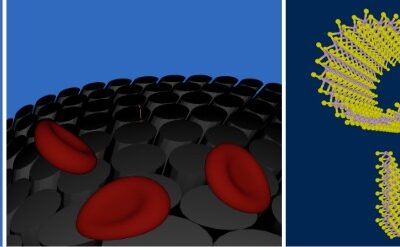
VR Laboratory 1
The objective of the first module is to help the students visualize and experience the different scales and structures of small-scale systems in relation to the macro-scale humans typically see in the daily lives. There are 2 activities in this module: (1) Particles across Scales and (2) Nanostructures.
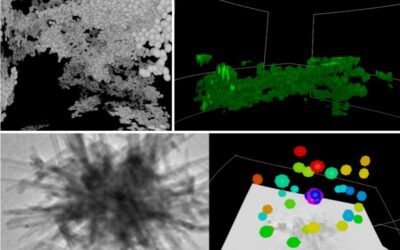
VR Laboratory 2
The second module focuses on the microscopy of small-scale systems, where the objective is to help students explore 3D imaging techniques (optical and electron microscopy) to visualize and characterize the particles and particle systems. There are 3 activities: (1) Percolation Simulation, (2) Colloidal Gel Confocal Microscopy, and (3) Hedgehog Particle Electron Microscopy.
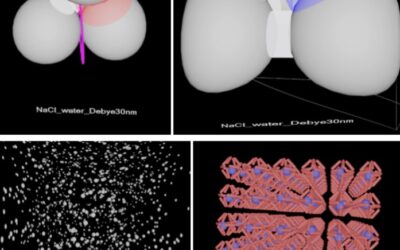
VR Laboratory 3
The third module aims to help students understand the interactions between particles and their surroundings. It consists of three activities: (1) Interparticle Interactions, (2) Electric Field Assembly, and (3) Cage Diffusion.