
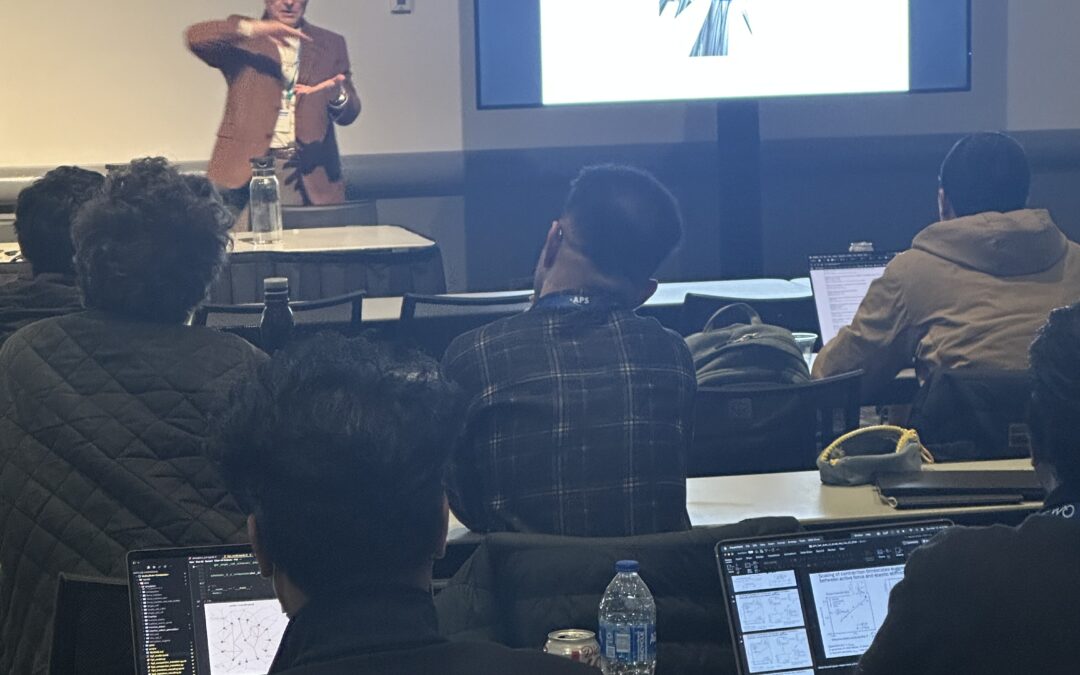
COMPASS: Center for Complex Particle Systems played a leading role at the APS Global Physics Summit, hosting two highly attended tutorials and contributing to a featured session on complex particles.
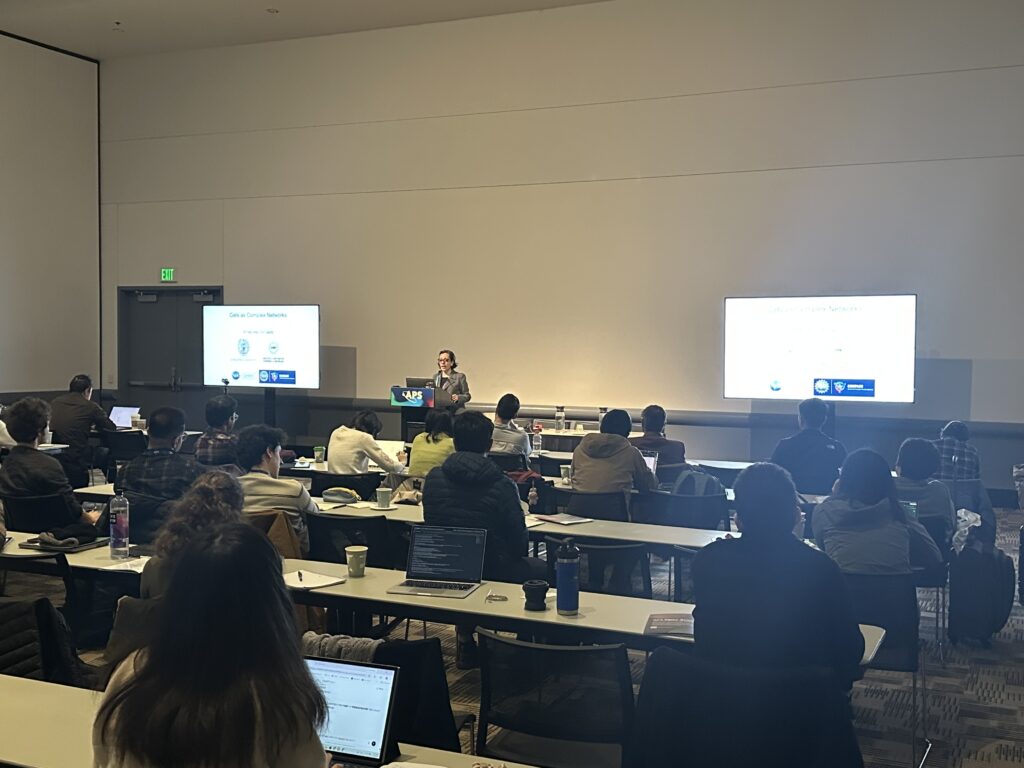
Organized by Professors Xiaoming Mao and Nicholas Kotov, the tutorials brought together researchers, students, and scientists from across disciplines to explore the rapidly evolving field of complex materials through the lens of network science.
Advancing Network Science for Materials Design
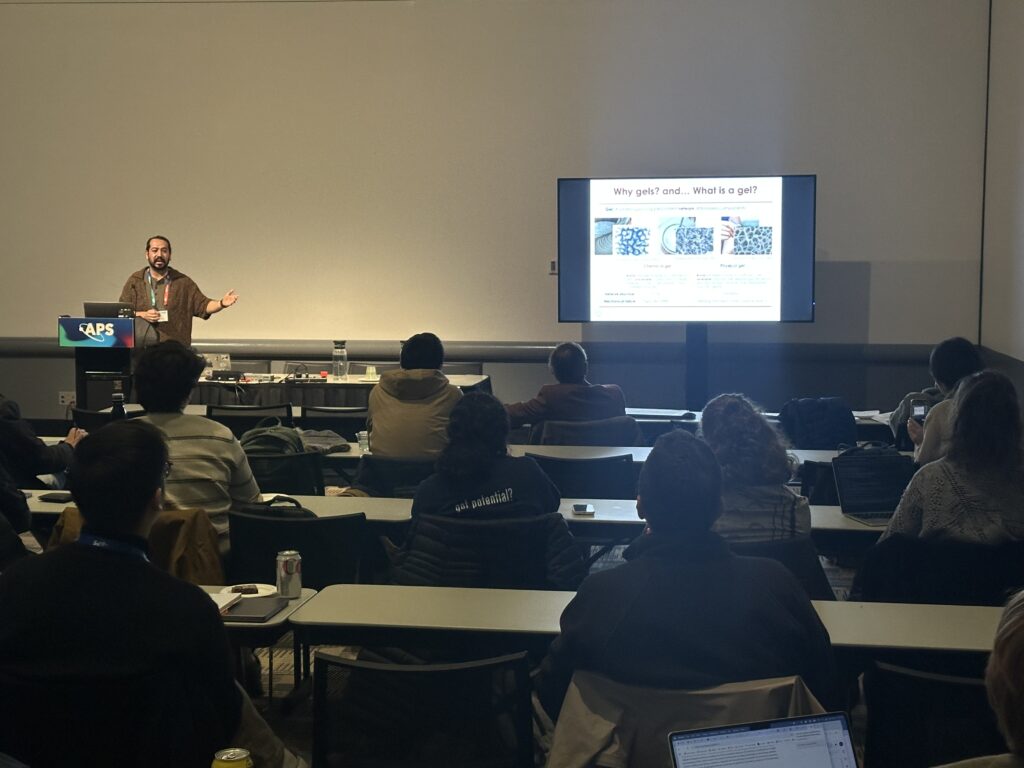
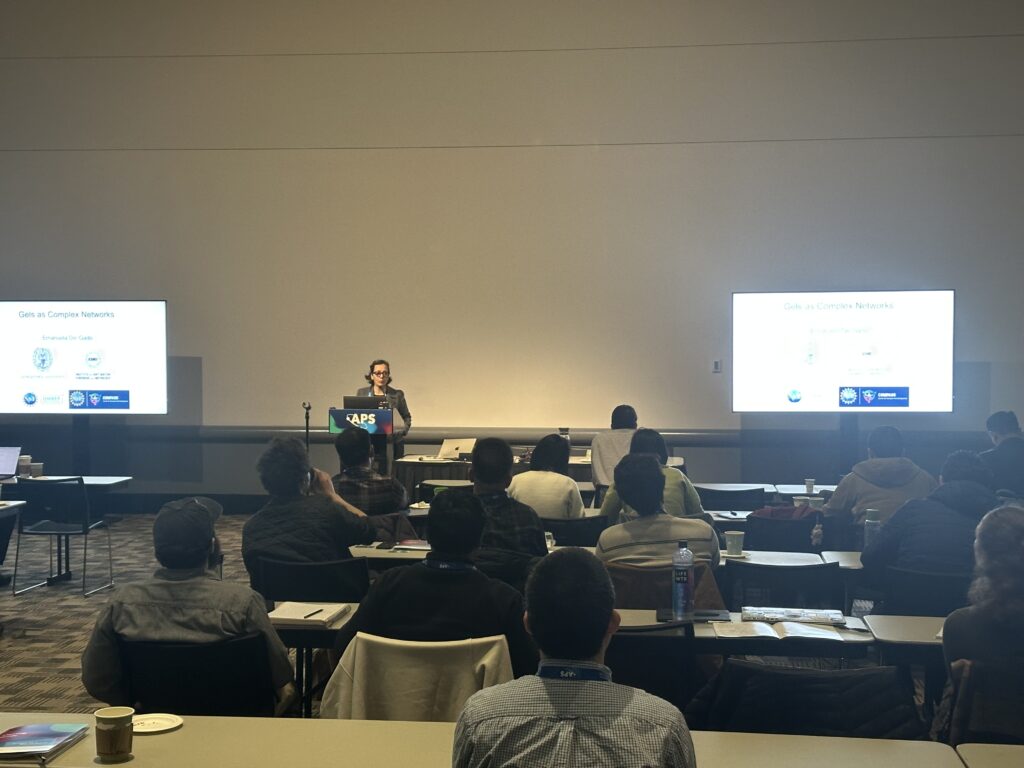
The two tutorials—Graphs and Networks for Complex Materials I & II—provided a comprehensive introduction to both foundational concepts and emerging applications.
- Tutorial I focused on the mathematical and physical foundations of graph theory and network science, offering a new framework for understanding complex materials.
- Tutorial II explored cutting-edge applications, including biomimetic materials, machine learning, and intelligent material systems.
Together, these sessions highlighted how graph-based approaches are transforming materials science—enabling researchers to uncover hidden structures, predict behaviors, and design materials with unprecedented functionality.
(See full tutorial details in the flyer: )
COMPASS Leadership and Contributions
COMPASS faculty were central to both the organization and instruction of these sessions.
- Organizers: Prof. Nicholas Kotov and Prof. Xiaoming Mao
- Instructors included: Prof. Safa Jamali and Prof. Emanuela Del Gado
These contributions reflect COMPASS’s commitment to advancing interdisciplinary education and equipping the next generation of scientists with new tools and frameworks.
Spotlight on Complex Particles
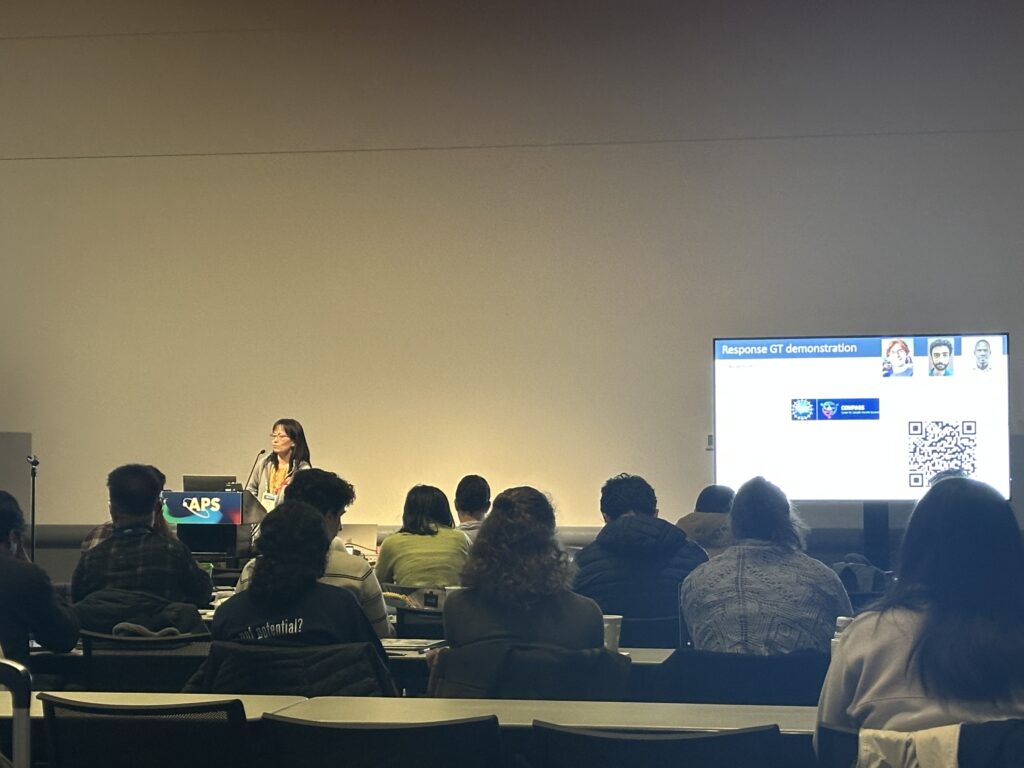
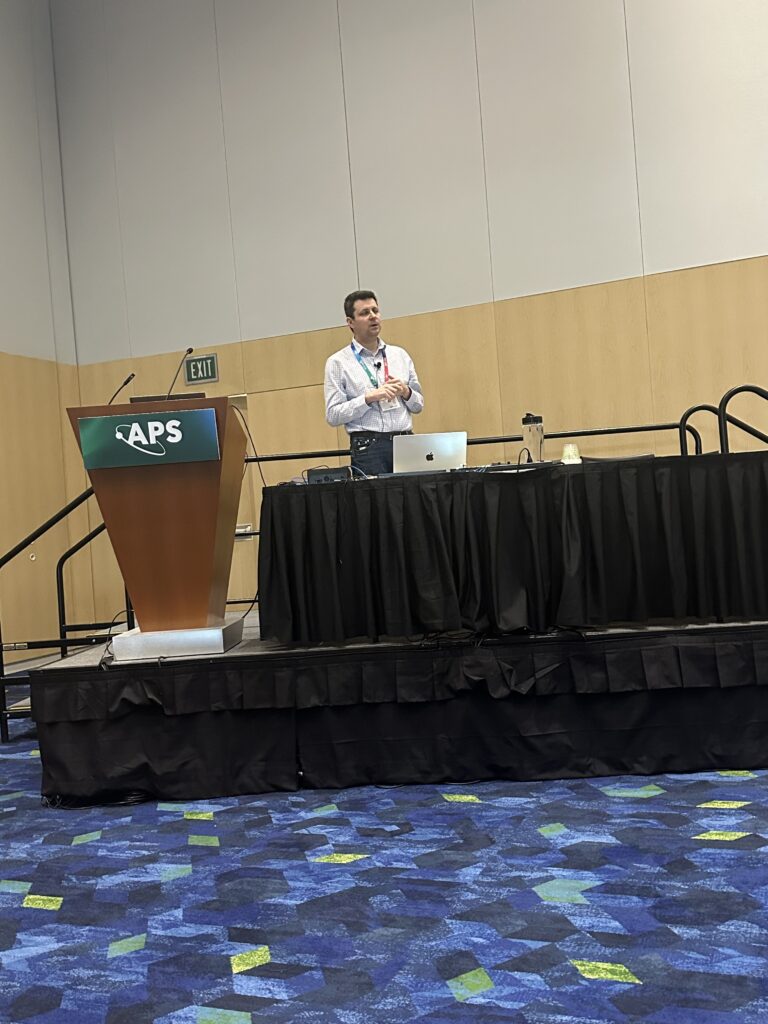
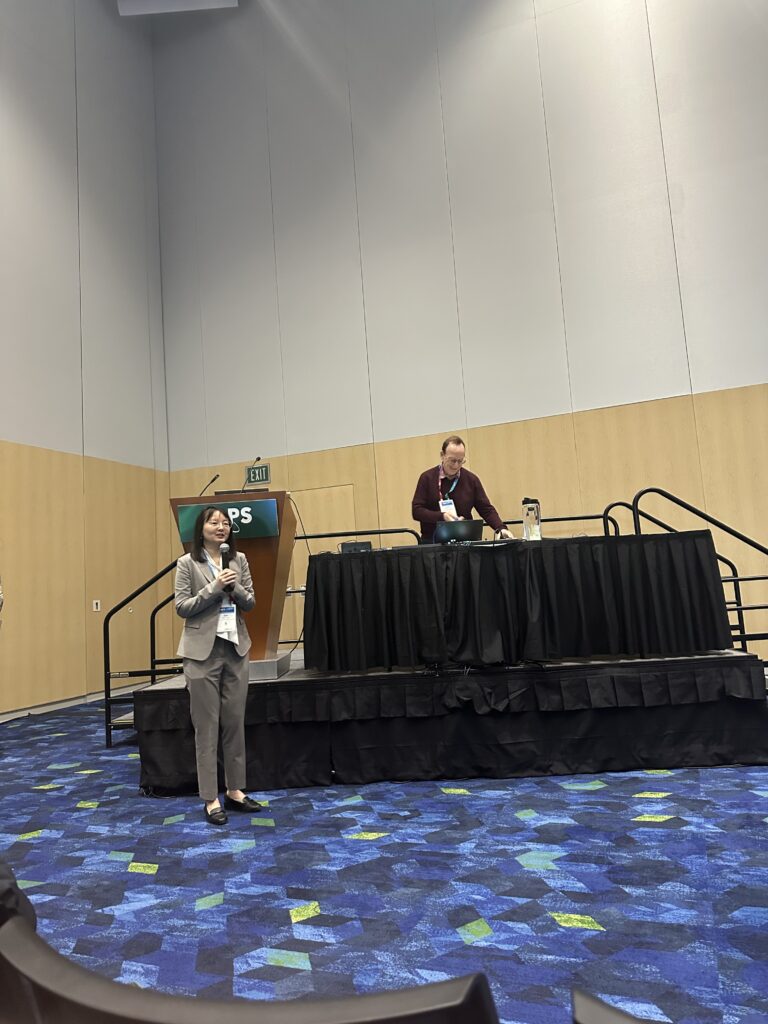
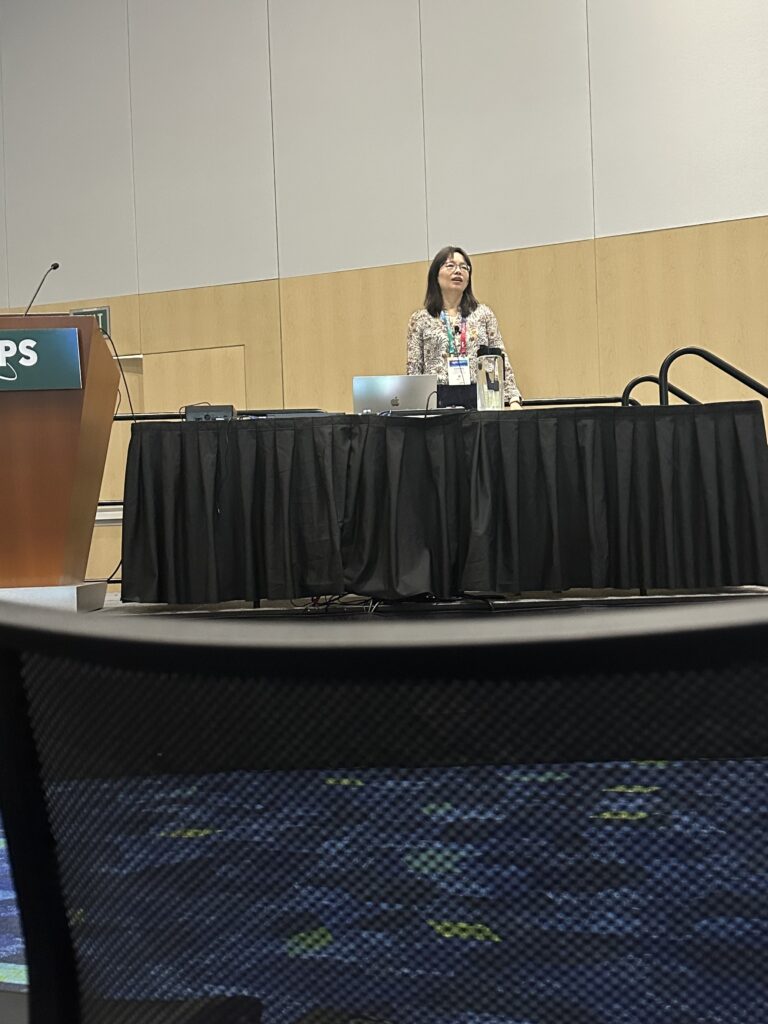
In addition to the tutorials, COMPASS researchers contributed to a dedicated session on complex particles, featuring talks from:
- Prof. Paul Bogdan
- Prof. Qian Chen
These presentations explored how complex particle systems can be engineered and understood across scales—further reinforcing the importance of integrating physics, engineering, and data-driven approaches.
Building Community and Driving Innovation
The APS tutorials and sessions demonstrated more than technical advancement—they showcased the power of collaboration. By bringing together experts across institutions and disciplines, COMPASS continues to foster a global community focused on solving complex challenges through materials innovation.
From foundational theory to real-world applications, COMPASS remains at the forefront of shaping how we design, understand, and apply next-generation materials.